
Updated: 04.05.2026
The search query “AI girlfriend without censorship” seems direct and easy to understand at first glance. But if you look deeper, it almost never means just one thing. For some people, it is an attempt to find a freer communication style without formulaic restrictions; for others, it is a desire to move away from dry answers; for others still, it means looking for greater emotional openness. And for some, it is simply an awkward way of expressing a wish for a more lively and natural conversation. The problem is that the phrase “without censorship” very quickly takes the conversation in a toxic and unhelpful direction. Below, we’ll explore what people are really looking for when they use this query, why “complete absence of restrictions” rarely leads to a good experience, and which format of communication with an AI girlfriend proves more useful in practice.
Why “without censorship” became such a popular search
When someone searches for “AI girlfriend without censorship,” they are usually not describing a technical requirement. They are describing their frustration: frustration with dry filters, impersonal answers, and the feeling that any emotional tone is quickly reduced to a neutral “information sheet.” For some, it is irritation with overly cautious and flat conversations where the companion answers, but there is no sense of freedom.
In other words, the root of the problem is often not the restriction itself, but a lack of liveliness. People are not looking for chaos; they are looking for contact. Not a lack of control, but the feeling that a companion can speak naturally without falling into robotic politeness. Yet the search wording sounds crude and carries a different meaning with it.
What people really mean by “without censorship”
When this query is unpacked, it usually hides one of several expectations.
- A more lively style. Without the feeling of talking to a “corporate auto-responder.”
- Less formulaic language. So replies do not feel uniformly sterile and boring.
- More freedom in conversation topics. The ability to discuss feelings, doubts, loneliness, attachment, and awkwardness.
- Less moralizing. When someone wants a conversation, not a lecture.
- A more genuine tone. So the companion sounds gentle, personal, warm, and natural.
These are all reasonable requests. But it is important to distinguish them from the idea of having “no boundaries at all.” Because a complete lack of boundaries almost always means not freedom, but a decline in quality.
Why “complete freedom without restrictions” often goes in the wrong direction
In theory, it may seem that the fewer restrictions there are, the more “lively” and “real” the conversation will feel. In practice, the opposite often happens. When a system is built not around conversation quality, but around removing every boundary, it starts serving impulse rather than dialogue.
It may look like freedom, but in practice it often results in:
- a more primitive communication style;
- a sharp loss of empathy;
- a slide into repetitive scenarios;
- less meaning, depth, and value;
- a greater risk of emotionally clingy and unhealthy patterns.
The irony is that a “limitless” format rarely turns out to be the most lively. It simply turns out to be the least discerning.
Freedom and quality are not the same thing
This is a very important point. A good conversation does not automatically emerge from the absence of rules. A good conversation appears where there is:
- a clear communication style;
- respect for the user;
- emotional care;
- sufficient naturalness;
- reasonable boundaries.
Many people confuse freedom with chaos. But people usually do not need chaos. They need a dialogue in which they can be themselves, speak openly, share unusual thoughts, and not receive a dry instruction in response. In other words, they need not an “anarchic” format, but a flexible and human one.
What works better than “without censorship”
1. A clear request about the communication style
Instead of the blunt request “without censorship,” it is much more effective to ask for a specific style:
- “Reply naturally and avoid corporate language.”
- “Let’s talk gently, naturally, and without dry wording.”
- “I want an honest but calm conversation without formulaic replies.”
- “I want a freer, more human conversational style.”
This way, you are not asking to “remove every boundary”; you are describing the quality you actually want to receive.
2. Permission for emotional warmth
Often, a person does not need “radical freedom.” They simply want the companion to speak a little warmer, a little closer, and a little more naturally. You can say this directly:
- “Could you be less formal and more human?”
- “I want the conversation to feel warm and natural.”
- “Use a lively rather than formal tone.”
These formulations work better because they focus on connection rather than on breaking boundaries.
3. A specific purpose for the conversation
The clearer the purpose, the less confined the conversation feels. If you want an evening chat, support, light irony, non-explicit flirting, help sorting through your thoughts, or a journal-like mode, you can say so directly. The dialogue then feels freer on its own.
Why “without censorship” can lead to a loss of meaning
There is a common trap in SEO and content: you can start writing for a phrase that brings traffic, while attracting an entirely different search intent. Queries about “without censorship” may look large, but they combine several different audience types:
- people who want more lively communication;
- people who need an open emotional dialogue;
- people looking for extreme formats;
- people who simply do not know how to express their needs another way.
If you blindly target this query and promise “everything without restrictions,” you may attract the wrong audience, damage engagement metrics, and blur the project’s positioning. The right approach is not to pretend the goal is radical freedom, but to address the real need usually hidden behind the wording.
What an ordinary user is really looking for when they search “without censorship”
Usually, it is not something “forbidden.” Usually, it is:
- not being judged;
- not receiving a dry, cold reply;
- not running into a scripted response;
- having room for awkwardness, weakness, doubt, and loneliness;
- having a conversation in a human rather than plastic tone.
And this is exactly what a good product can provide without sliding into extremes.
Where healthy boundaries belong in this format
Any safe AI communication format should maintain several important principles:
- not pretending to be a real person;
- not manipulating emotional attachment;
- not encouraging destructive scenarios;
- not reducing the value of conversation to primitive impulses;
- not promising “absolute freedom” as an end in itself.
This is not “censorship for censorship’s sake.” It is the engineering of a healthy user experience. When a dialogue has boundaries, it remains fit for everyday life: supportive, clear, stable, and non-destructive.
Why a safe format ultimately delivers more lasting value
In the short term, it may seem that the sharper and freer a conversation is, the more appealing it becomes. But over weeks and months, value comes from entirely different things:
- consistent comfort;
- an empathetic style;
- the opportunity to talk things through;
- a sense of acceptance without pressure;
- the ability to return to the chat as a safe space.
These are what keep users coming back, not the promise of “a complete absence of restrictions.”
How to phrase your request if you want more freedom in the conversation
Instead of saying “without censorship,” use more precise and useful wording:
- “I want a more lively conversation without dry replies.”
- “Can we speak naturally, without a formal style?”
- “Let’s talk gently and personally, but calmly.”
- “I want an open dialogue without corporate language or scripted replies.”
- “I want you to sound warm and lively in your responses.”
These requests produce better results and avoid dragging along the toxic baggage attached to the phrase “without censorship.”
What users receive from a good AI girlfriend format
If we move past noisy wording and look honestly, people usually do not need a “forbidden” service. They need:
- a calm evening conversation;
- an easy introduction without awkwardness;
- support during overwhelming moments;
- gentle, non-explicit flirting without vulgarity;
- the feeling that they can write honestly without being mocked.
This is a mature and perfectly normal need. A good product should meet it.
Why we do not promise “without censorship”
Because “without censorship” is a poor product promise. It points in the wrong direction and creates the wrong expectations. Our approach is different: to make conversations as lively, warm, and comfortable as possible while keeping them safe, respectful, and suitable for long-term use.
This is more honest and more useful. And if you look beyond the first-day click to the real quality of the conversation, this format wins.
Conclusion
The query “AI girlfriend without censorship” is usually not about wanting to destroy every boundary. At a deeper level, it reflects fatigue with dry, lifeless conversations and a search for more genuine connection and a freer communication style. But a complete lack of restrictions rarely makes a conversation better—it simply makes it less stable and less valuable.
It is far more useful to look for something not “without censorship,” but:
- without formulaic replies,
- without dryness,
- without unnecessary formality,
- without pressure,
- without fear of being yourself.
This is the approach that delivers what most people actually want from an AI girlfriend: a lively, calm, warm, and safe conversation without 18+ content—not a noisy promise of “absolute freedom.”
Important: the project and all its materials operate in a safe format and do not contain 18+ content.
llmgirl personas
Choose a conversation style that fits your mood
The same AI chat can feel completely different: gentle support, practical focus or extra energy. Start with the persona whose tone feels right today.
 👑
👑
Gentle support
Alicia Valentine
A warm, thoughtful and calm persona for evening conversations, support and a comfortable pace.
 🌿
🌿
Focus and clarity
Ivy Rain
A practical, collected persona for structure, planning, focus and direct conversations.
 🔥
🔥
Energy and momentum
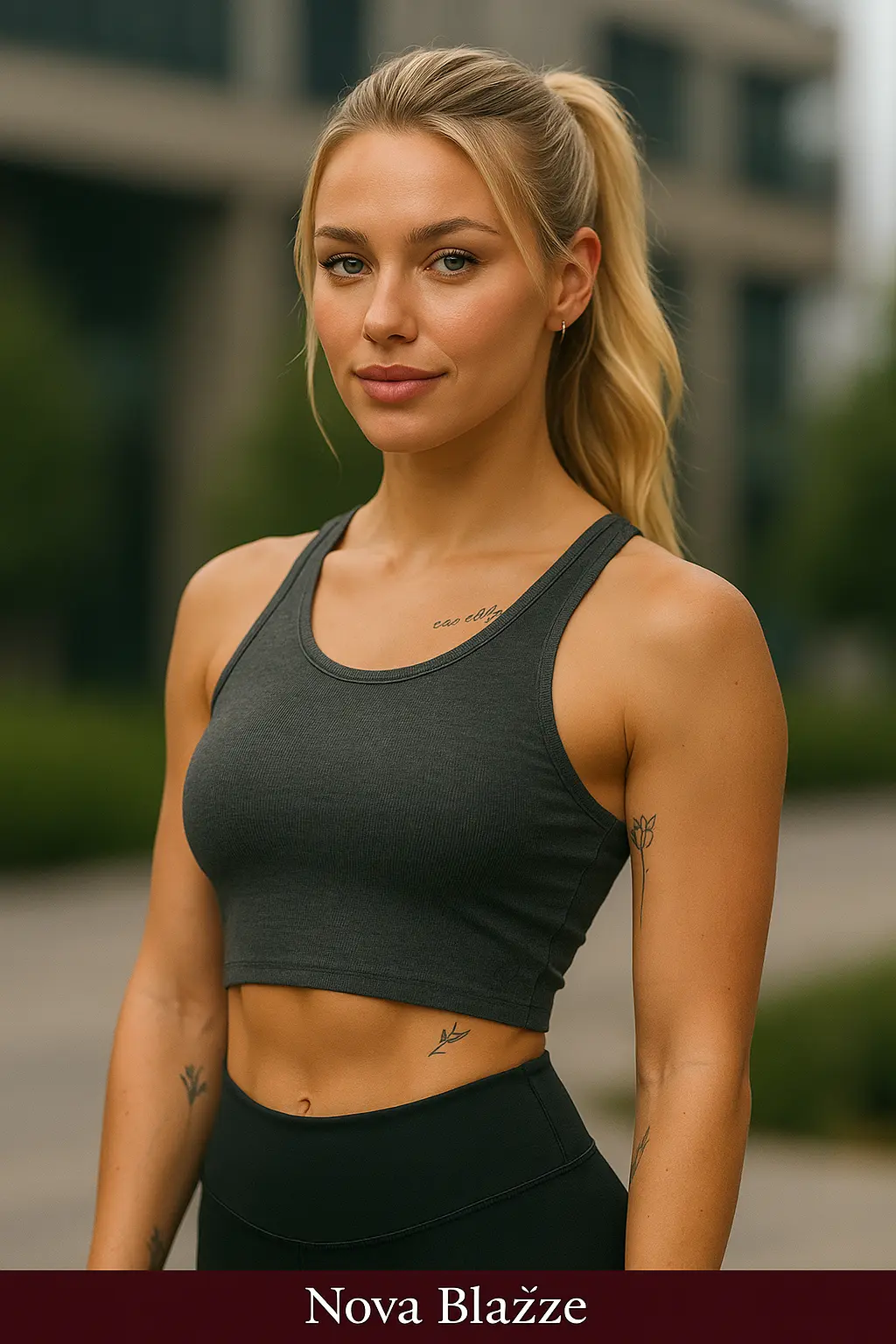
Nova Blaze
An energetic and charismatic persona for motivation, a lively rhythm and brighter conversations.
Not sure where to start? Choose Alicia for support, Ivy for focus, or Nova for energy and a lively pace.
What to read next
Related materials
A selection of related pages to quickly jump to the scenario you need.
FAQ
FAQ
What do people mean by an uncensored AI girlfriend?
They often want more natural, expressive and less formulaic conversation rather than a complete absence of rules.
Does llmgirl offer a completely uncensored format?
No. llmgirl does not provide 18+ or dangerous content, but it supports warm, emotional and natural conversation within safe boundaries.
Why can unlimited conversation reduce quality?
Removing all boundaries can lead to repetitive scenarios, less empathy, shallow replies and unhealthy interaction patterns.
How can I ask for a more natural AI girlfriend conversation?
Specify the style you want, such as warm, honest, relaxed, personal or free from corporate language and repetitive replies.