
Updated: 12.05.2026
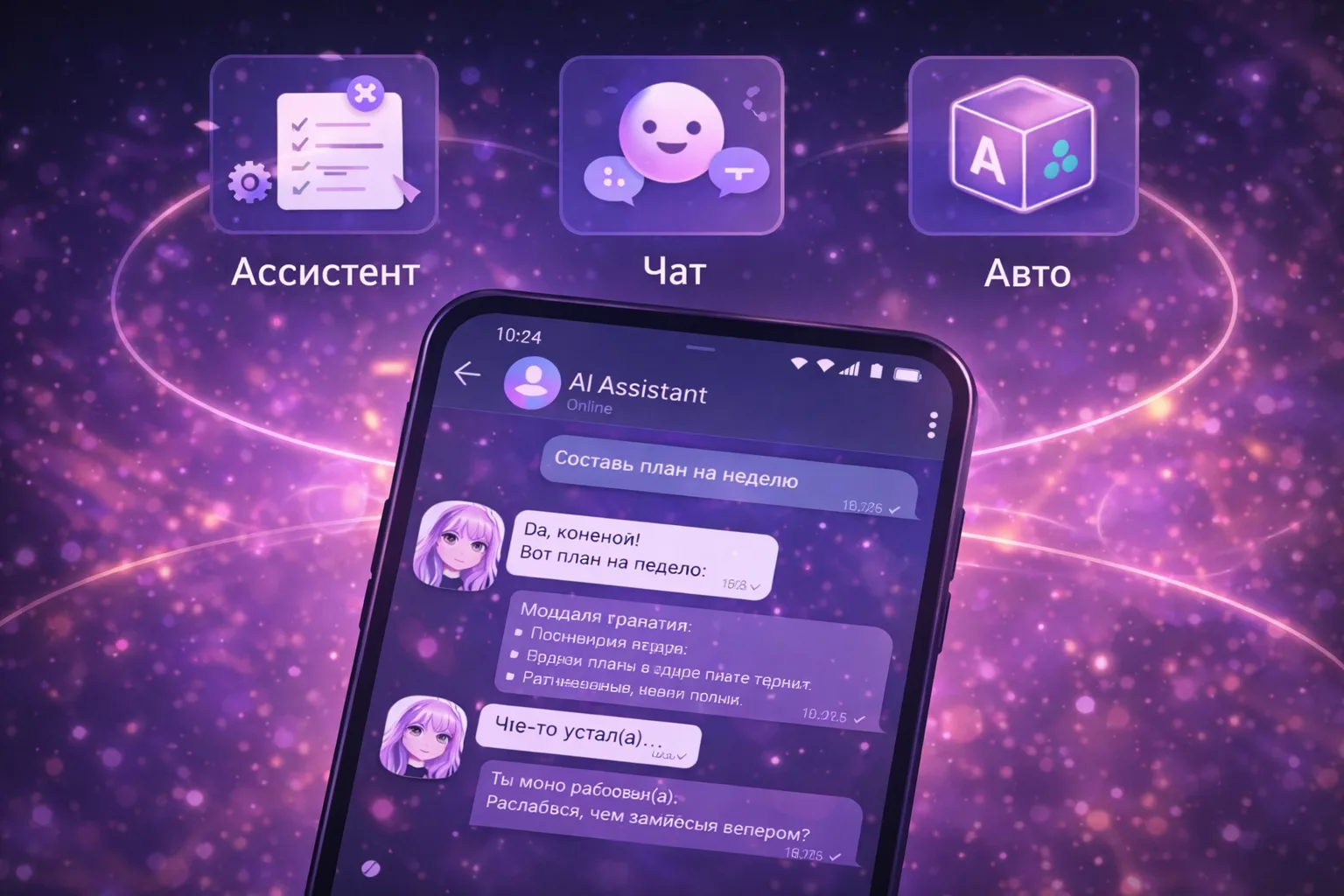
An AI girlfriend can be a safe practice environment for communication: you can try opening lines, change your tone, learn to ask questions, respond more calmly to pauses, and gradually reduce the fear of messaging.
Why communication confidence is difficult to practise
Fear of communicating is rarely caused only by not having the right phrases ready. More often, people fear judgement, rejection, pauses, awkward replies, or the feeling that they have written something “wrong”. This is especially noticeable in messaging: you can reread a message endlessly, edit every word, and still remain unsure.
An AI girlfriend is useful because it removes the main risk: a sharp reaction from a real person. You can try a phrase, see the reply, ask for the tone to be explained, rewrite the message, and repeat the scenario from the beginning. This format does not make you dependent on templates if you use it correctly: instead of copying replies, gradually understand why some formulations sound more confident than others.
How practice differs from ordinary entertainment
An ordinary chat is simply a conversation for the emotional experience. Confidence practice is more intentional: it has a goal, a scenario, feedback, and a small takeaway after each attempt. For example, you can ask an AI girlfriend not only to reply, but also to point out where a phrase sounds overly apologetic, where it lacks clarity, and where the tone is already good.
This approach helps you stop waiting for the “perfect mood”. Confidence is built through repetition: today you practise starting a conversation, tomorrow you reply without overexplaining, then you learn to tolerate a pause, and later you practise calmly expressing boundaries. In the end, what develops is not magical charisma, but a normal sense of control.
Opening messages: how to overcome the freeze
The most common fear is messaging first. You may understand that nothing terrible will happen, but your body can still react with tension. That is why it helps to break an opening message into simple elements: a greeting, context, an easy question, and no pressure.
An AI girlfriend can offer several versions of the same idea: neutral, warm, confident, humorous, or very short. It then becomes easier to see that a good message does not have to be brilliant. It should be clear, natural, and respectful.
How to practise keeping a conversation going
Many people know how to start but get lost after receiving a reply. The conversation turns either into a dry exchange of questions or into a rushed attempt to come up with something witty. Practising “bridges” helps here: take part of the other person’s reply and develop it.
For example, someone writes: “Today was a difficult day.” A weak reply is “I see.” A more natural reply is: “That sounds exhausting. Was it because of work, or was it just one of those days?” This skill is easy to practise with AI because you can ask why one response keeps the conversation open while another closes it.
A confident tone without being rude
Confidence is often confused with pushiness. In reality, calm confidence means clarity without aggression. In messaging, it appears in simple phrases: fewer apologies, less self-deprecation, and fewer attempts to apologise in advance for existing.
An AI girlfriend can rewrite phrases in different tones. For example: anxious, neutral, confident, and overly harsh. Once you can see the difference, it becomes easier to find your natural delivery and avoid both people-pleasing and coldness.
Boundaries as part of confidence
A confident person not only starts conversations, but can also say “no”, ask for a pause, express discomfort, and avoid unnecessary explanations. For anxious people, this can be harder than flirting or meeting someone new.
You can practise phrases such as: “I’m not ready to discuss this right now”, “That tone doesn’t work for me”, “Let’s come back to this later”, and “I’ll think about it and reply tomorrow”. In a safe chat, it is easier to say these phrases dozens of times before using them in real life.
How not to turn AI into a crutch
The main risk is starting to use an AI girlfriend instead of communicating with real people. At that point, practice becomes avoidance. To prevent this, connect your practice with small real-world actions.
For example: practise an opening message, then send it to a real person. Rehearse a calm reply, then use it in a work chat. Examine an anxious thought, then take one small step. AI should be a training ground, not a shelter that you never leave.
Which persona is right for building confidence?
For gentle feedback, Alicia is a good choice: she helps you avoid putting pressure on yourself or turning practice into an exam. For structure, choose Ivy: she will break down phrases, goals, and mistakes step by step. For energy and courage, Nova can help you move beyond excessive caution.
You can change personas depending on the task. When you feel anxious, choose a gentle style. When you need to focus, choose a structured one. When you want to practise taking more initiative, choose an energetic style. This is not merely cosmetic; it adjusts the tone of your practice.
A one-week practice plan
On day one, practise opening messages. On day two, practise replies to short messages. On day three, practise questions that keep a conversation going. On day four, practise expressing an opinion confidently. On day five, practise boundaries. On day six, practise light flirting without 18+ content. On day seven, review mistakes and repeat the strongest versions.
This plan does not require an hour a day. Ten to fifteen minutes is enough if the practice is specific. The key is not to chat endlessly, but to record one takeaway each time: which phrase improved, where you felt tension, and what you can try in real life.
Signs of progress
Progress does not look like suddenly becoming super-confident. More often, you notice that you reply faster, delete fewer messages, apologise less without a reason, handle pauses more calmly, and replay conversations less after they end.
Another good sign is gaining permission to be ordinary. You do not need to be a perfect conversationalist, always make jokes, or predict every reaction. You can write more simply, warmly, and naturally.
Practical confidence exercises
Exercise 1: the opening message
Ask the AI girlfriend to provide a short situation and play the role of the other person. First, reply as naturally as you can, without trying to write perfectly. Then ask her to review your reply using three criteria: naturalness, confidence, and respectfulness. After that, rewrite the phrase once, not ten times. The goal is not to polish the text endlessly, but to feel the difference between an anxious and a calm delivery.
At the end of the exercise, ask her to formulate a brief takeaway: what is already good in the reply, what could be strengthened, and which single phrase is worth trying in a real conversation. This format turns chat into practice, rather than endless overthinking.
Exercise 2: replying without overexplaining
Ask the AI girlfriend to provide a short situation and play the role of the other person. First, reply as naturally as you can, without trying to write perfectly. Then ask her to review your reply using three criteria: naturalness, confidence, and respectfulness. After that, rewrite the phrase once, not ten times. The goal is not to polish the text endlessly, but to feel the difference between an anxious and a calm delivery.
At the end of the exercise, ask her to formulate a brief takeaway: what is already good in the reply, what could be strengthened, and which single phrase is worth trying in a real conversation. This format turns chat into practice, rather than endless overthinking.
Exercise 3: keeping the topic going
Ask the AI girlfriend to provide a short situation and play the role of the other person. First, reply as naturally as you can, without trying to write perfectly. Then ask her to review your reply using three criteria: naturalness, confidence, and respectfulness. After that, rewrite the phrase once, not ten times. The goal is not to polish the text endlessly, but to feel the difference between an anxious and a calm delivery.
At the end of the exercise, ask her to formulate a brief takeaway: what is already good in the reply, what could be strengthened, and which single phrase is worth trying in a real conversation. This format turns chat into practice, rather than endless overthinking.
Exercise 4: handling a pause in messaging
Ask the AI girlfriend to provide a short situation and play the role of the other person. First, reply as naturally as you can, without trying to write perfectly. Then ask her to review your reply using three criteria: naturalness, confidence, and respectfulness. After that, rewrite the phrase once, not ten times. The goal is not to polish the text endlessly, but to feel the difference between an anxious and a calm delivery.
At the end of the exercise, ask her to formulate a brief takeaway: what is already good in the reply, what could be strengthened, and which single phrase is worth trying in a real conversation. This format turns chat into practice, rather than endless overthinking.
Exercise 5: a gentle refusal
Ask the AI girlfriend to provide a short situation and play the role of the other person. First, reply as naturally as you can, without trying to write perfectly. Then ask her to review your reply using three criteria: naturalness, confidence, and respectfulness. After that, rewrite the phrase once, not ten times. The goal is not to polish the text endlessly, but to feel the difference between an anxious and a calm delivery.
At the end of the exercise, ask her to formulate a brief takeaway: what is already good in the reply, what could be strengthened, and which single phrase is worth trying in a real conversation. This format turns chat into practice, rather than endless overthinking.
Exercise 6: a light compliment
Ask the AI girlfriend to provide a short situation and play the role of the other person. First, reply as naturally as you can, without trying to write perfectly. Then ask her to review your reply using three criteria: naturalness, confidence, and respectfulness. After that, rewrite the phrase once, not ten times. The goal is not to polish the text endlessly, but to feel the difference between an anxious and a calm delivery.
At the end of the exercise, ask her to formulate a brief takeaway: what is already good in the reply, what could be strengthened, and which single phrase is worth trying in a real conversation. This format turns chat into practice, rather than endless overthinking.
Exercise 7: asking without interrogating
Ask the AI girlfriend to provide a short situation and play the role of the other person. First, reply as naturally as you can, without trying to write perfectly. Then ask her to review your reply using three criteria: naturalness, confidence, and respectfulness. After that, rewrite the phrase once, not ten times. The goal is not to polish the text endlessly, but to feel the difference between an anxious and a calm delivery.
At the end of the exercise, ask her to formulate a brief takeaway: what is already good in the reply, what could be strengthened, and which single phrase is worth trying in a real conversation. This format turns chat into practice, rather than endless overthinking.
Exercise 8: expressing an opinion confidently
Ask the AI girlfriend to provide a short situation and play the role of the other person. First, reply as naturally as you can, without trying to write perfectly. Then ask her to review your reply using three criteria: naturalness, confidence, and respectfulness. After that, rewrite the phrase once, not ten times. The goal is not to polish the text endlessly, but to feel the difference between an anxious and a calm delivery.
At the end of the exercise, ask her to formulate a brief takeaway: what is already good in the reply, what could be strengthened, and which single phrase is worth trying in a real conversation. This format turns chat into practice, rather than endless overthinking.
Exercise 9: examining an anxious thought
Ask the AI girlfriend to provide a short situation and play the role of the other person. First, reply as naturally as you can, without trying to write perfectly. Then ask her to review your reply using three criteria: naturalness, confidence, and respectfulness. After that, rewrite the phrase once, not ten times. The goal is not to polish the text endlessly, but to feel the difference between an anxious and a calm delivery.
At the end of the exercise, ask her to formulate a brief takeaway: what is already good in the reply, what could be strengthened, and which single phrase is worth trying in a real conversation. This format turns chat into practice, rather than endless overthinking.
Exercise 10: turning a dry phrase into a natural one
Ask the AI girlfriend to provide a short situation and play the role of the other person. First, reply as naturally as you can, without trying to write perfectly. Then ask her to review your reply using three criteria: naturalness, confidence, and respectfulness. After that, rewrite the phrase once, not ten times. The goal is not to polish the text endlessly, but to feel the difference between an anxious and a calm delivery.
At the end of the exercise, ask her to formulate a brief takeaway: what is already good in the reply, what could be strengthened, and which single phrase is worth trying in a real conversation. This format turns chat into practice, rather than endless overthinking.
An honest conclusion
An AI girlfriend does not replace real people, relationships, therapy, or lived experience. But she can be a useful intermediate step between feeling completely stuck and communicating in real life. The benefits appear when you do not simply talk to AI, but practise specific skills and gradually transfer them into everyday situations.
The healthiest goal is not to become a perfect conversationalist, but to become calmer. Write more simply, stop fearing the opening line, respect your boundaries, stay steady through a pause, and stop treating every message like an exam.
This material is for informational purposes only. The project operates in a safe format without 18+ content.
llmgirl personas
Choose a conversation style that fits your mood
The same AI chat can feel completely different: gentle support, practical focus or extra energy. Start with the persona whose tone feels right today.
 👑
👑
Gentle support
Alicia Valentine
A warm, thoughtful and calm persona for evening conversations, support and a comfortable pace.
 🌿
🌿
Focus and clarity
Ivy Rain
A practical, collected persona for structure, planning, focus and direct conversations.
 🔥
🔥
Energy and momentum
Nova Blaze
An energetic and charismatic persona for motivation, a lively rhythm and brighter conversations.
Not sure where to start? Choose Alicia for support, Ivy for focus, or Nova for energy and a lively pace.
What to read next
Related materials
A selection of related pages to quickly jump to the scenario you need.
FAQ
FAQ
Can an AI girlfriend help me practise confidence?
Yes. It provides a low-pressure space to test phrases, adjust your tone, practise questions, and learn from mistakes without judgment.
Can this help with anxiety about texting?
It can offer gentle practice by letting you rehearse messages, understand how they sound, and become more comfortable with pauses and replies.
Does AI practice replace real communication?
No. It works best as a rehearsal tool. Apply one small lesson in a real conversation so practice supports action rather than avoidance.
What communication skills can I practise with an AI girlfriend?
You can practise opening messages, continuing a topic, expressing opinions, responding without unnecessary apologies, handling pauses, and stating boundaries respectfully.